

Storm damage and the claim
Storm and hail damage roof repair in Huntersville, NC
Wind coming off Lake Norman and hail that never shows from the driveway both damage a roof in ways you can't see from the yard. Here's what to look for and how a claim actually runs.
Hail and wind don't damage a roof the same way
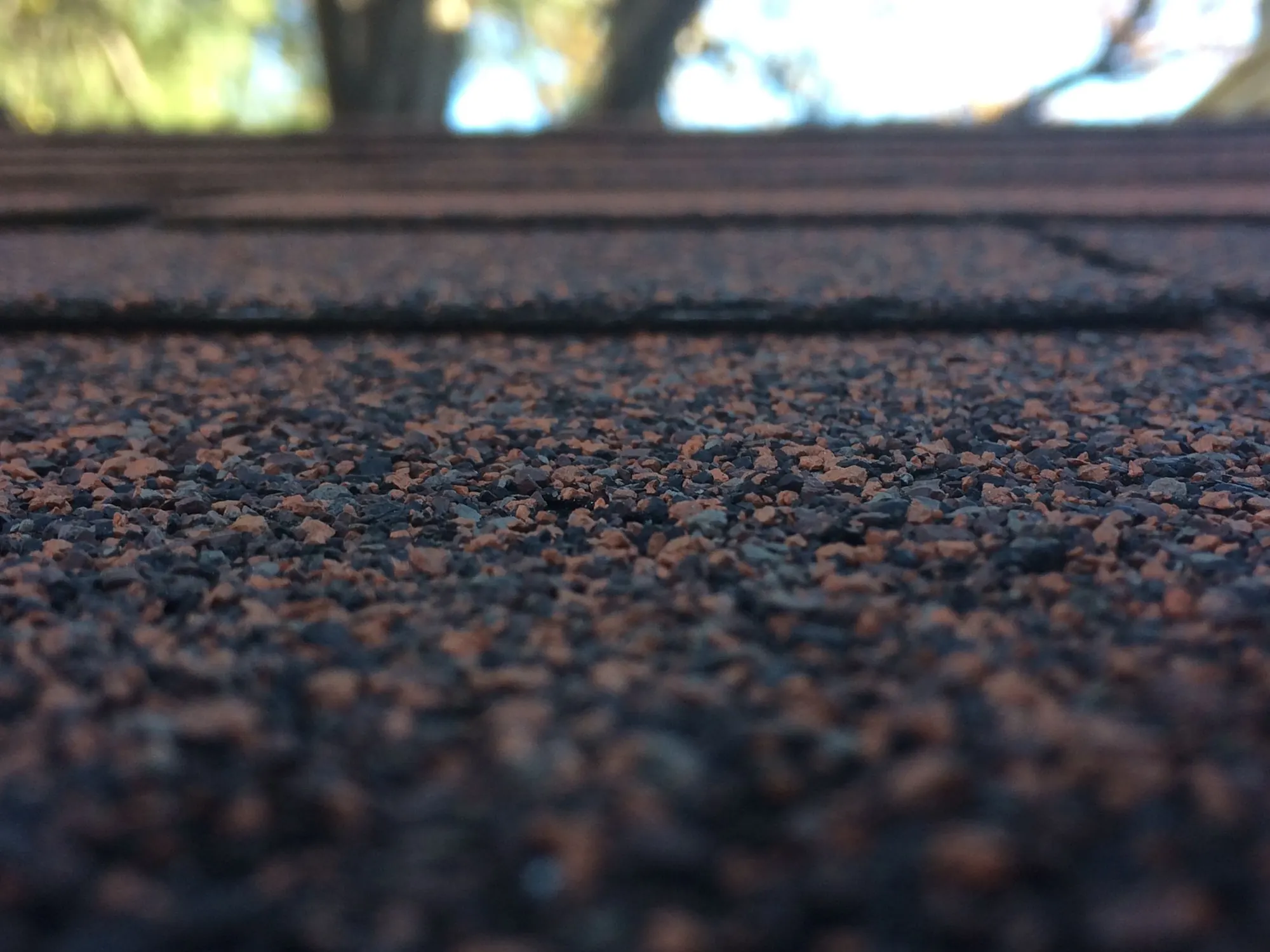
Hail hits a shingle and either knocks granules loose or bruises the asphalt mat underneath without breaking the surface. Granule loss exposes the mat to UV and speeds up aging across the whole slope; a bruise is softer and can crack later even though it looks fine the day after the storm. Wind works differently. It gets under a tab edge, lifts it, and either cracks the sealant strip or creases the shingle when it snaps back down. A creased or lifted tab is a lot more likely to leak in the next rain than a bruised one is to fail immediately, but both are real damage.
Neither one is visible from the driveway or from a phone camera at ground level. Hail bruising and granule loss show up close, on the shingle surface itself, and a creased tab often lies flat again once the wind stops, so it looks fine until the sealant fails months later. That's exactly why we get on the roof to document damage instead of trying to assess it from photos taken standing on the lawn.
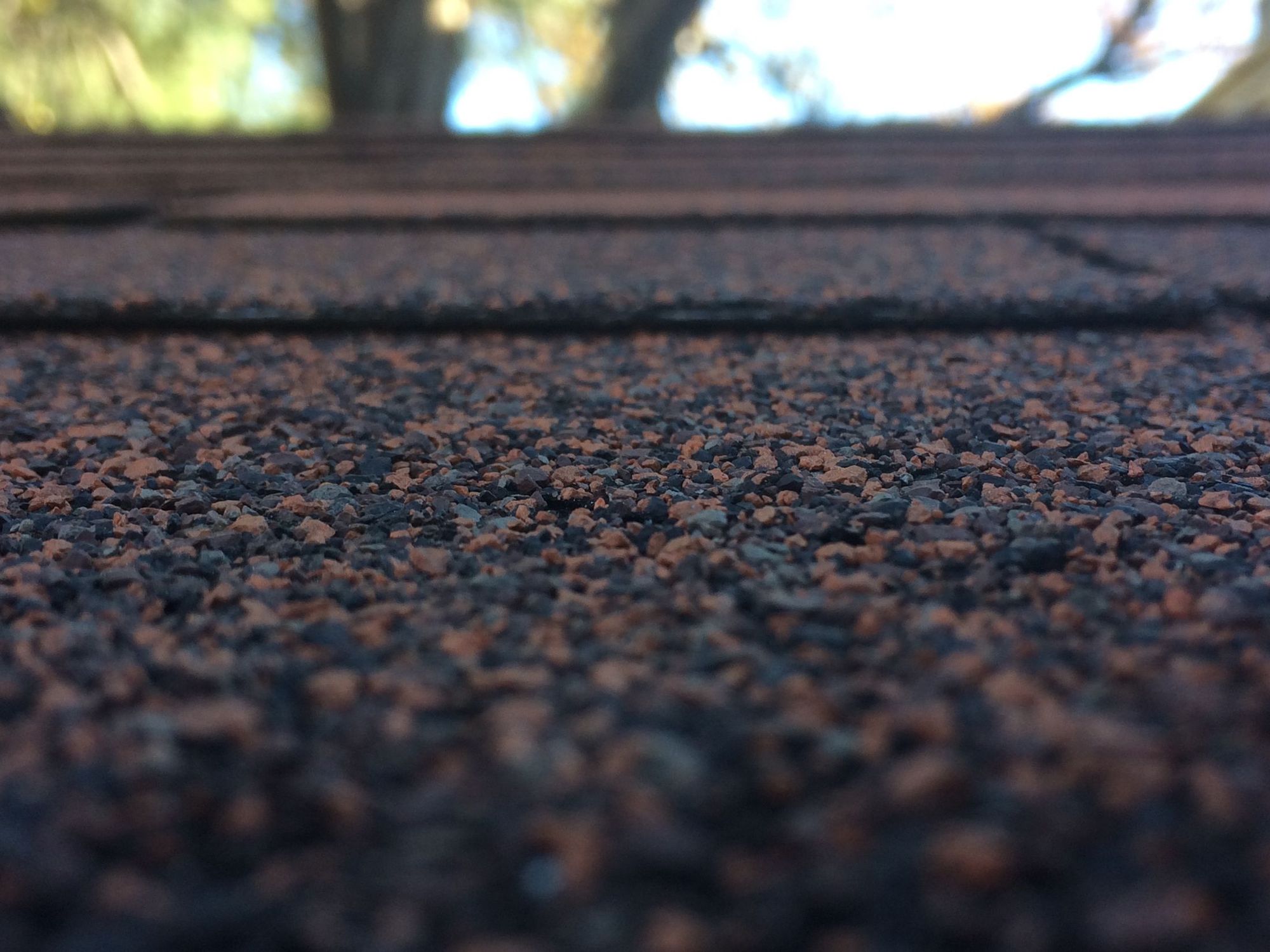 02Field shingles: granules and nail popsFix now
Bare spots on the south slope, granules turning up in the gutter trough, fourteen nail pops, two with the head through the mat.
 01Ridge cap and ridge ventGood
Cap is original and seated, no lifted tabs. Ridge vent is continuous but doing nothing without intake below it.
 11Gutters and downspoutsWatch
Seamless aluminum, sound, pitched away from the left downspout. Right downspout dumps against the foundation with no extension.


How the claim process runs

- 01DocumentWe get on the roof and take dated photos of every affected area, plus a measured diagram of the roof itself, before anything else happens.
- 02FileYou file the claim with your insurer, and we give you the documentation to support it. We don't file it for you, but we make sure you're not filing with nothing to back it up.
- 03Walk it with the adjusterWe can be on the roof when the adjuster walks it. Having someone there who knows the difference between hail bruising and normal wear changes how thoroughly the roof gets scoped.
- 04ScopeThe adjuster writes an initial scope of what they'll cover. We review it against what we documented and flag anything that looks short or missing.
- 05SupplementIf the scope misses damage we documented, flashing, a ridge cap, decking that needs replacing, we file a supplement with photos and notes to support the addition.
- 06BuildOnce the scope is settled, we schedule the work the same way as any other job: full tear-off, new underlayment, correct flashing, and a same-day dry-in.
Hail versus wind, side by side
| What hail does | Knocks granules loose or bruises the asphalt mat, weakening the shingle without necessarily breaking its surface right away. |
|---|---|
| What wind does | Lifts a shingle tab at the edge and either breaks the sealant strip or creases the tab when it drops back into place. |
| Why neither shows from the ground | Both types of damage happen at a scale and an angle that's only visible up close, on the roof surface itself, not from the yard or a ladder at the eave. |
| Why it matters if it's not fixed | Granule loss and creased tabs both shorten the shingle's remaining service life and create paths for water even before an obvious leak appears. |
The deductible law, and the door-knockers
Waiving, absorbing, or rebating any part of your insurance deductible is illegal in North Carolina. It doesn't matter how it's phrased on a flyer or how normal it sounds coming from a friendly crew in your driveway. A contractor offering to eat your deductible is telling you, whether they mean to or not, what else they're willing to do off the books to get the job, and that should make you less comfortable with them, not more.
Storm-chasing door-knockers tend to show up in a neighborhood within days of a hail or wind event, working off a list of addresses rather than a relationship with the town. They often push a fast signature before an adjuster has even been out, and they're frequently gone by the time a workmanship issue shows up a year later. We don't door-knock after storms. If your neighborhood got hit, call us and we'll come document your roof properly, but we won't be the truck idling on your street the next morning.
What to do if you suspect storm damage
- Take dated photos from the ground if it's safe, but don't get on the roof yourself to inspect it
- Call us before signing anything with a contractor who showed up unprompted after the storm
- Ask any contractor directly whether they'll waive your deductible, and treat a yes as a warning sign, not a selling point
- Keep your own copy of every photo, diagram, and document, separate from what your insurer or contractor keeps
- Expect the adjuster meeting to happen on the roof, not over the phone or from photos alone
Questions we get on the phone
How do I know if my roof has hail damage if I can't see anything from the ground?
You mostly can't tell from the ground, which is the point. Hail bruises the mat and knocks granules loose at a scale that's only visible up close on the shingle surface. If a storm hit your area, the safest move is to have us document the roof directly instead of guessing based on what's visible from the yard.
Can a contractor legally waive my insurance deductible?
No. Waiving, absorbing, or rebating any part of a deductible is illegal in North Carolina regardless of how it's presented. A contractor offering it is signaling they're willing to cut other corners too, and that should factor into whether you trust them with the rest of the job.
Will you meet with my insurance adjuster?
Yes. We can be on the roof when the adjuster walks it. Having someone present who can point to specific hail bruising or wind-creased tabs, rather than relying on photos alone, usually results in a more accurate scope of the actual damage.
What if the adjuster's scope misses damage you documented?
We file a supplement with the photos and measured diagram we took during the documentation step. Supplementing is a normal part of the claim process when the initial scope doesn't match what's actually on the roof, and it doesn't require starting the claim over.
Why do storm-chasing contractors go door to door after a storm hits?
They're working off an address list built from storm-tracking data, not a relationship with the neighborhood, and they're pushing to get a signed contract before you've talked to your insurer or gotten a second opinion. We don't operate that way; call us and we'll come document your roof on your schedule.
Get the roof documented
Monday to Friday 7am to 6pm. Saturday 8am to 2pm. Active leaks answered after hours.