

Flashing
Flashing and leak repair in Huntersville, NC
Most repeat leaks trace back to flashing, not shingles. A missing chimney cricket or reused step flashing will leak eventually no matter how new the roof above it looks.
Why this is so common in the local housing stock
Drip edge is the strip of bent metal along the eaves and rakes that throws water off the deck and into the gutter instead of letting it wick behind the fascia. It's an hour's work on an average house, which is exactly why it's one of the first things a budget roofer leaves off or cuts short on a first roof. We see it missing constantly on 1990s and 2000s builder-grade roofs across Huntersville and Cornelius.
Step flashing gets reused for the same reason, cost and speed. It's technically possible to tuck old step flashing under new shingles during a re-roof, but the metal has already fatigued and sealant has already failed at the laps, so it leaks again within a season or two. We replace it every time, not just when it's visibly bad.
Chimney crickets are the other repeat offender. A cricket diverts water around the uphill side of a chimney instead of letting it dam up and soak the surrounding shingles, and plenty of original construction skipped it on anything narrower than a certain width. If your chimney has a history of leaking specifically on the uphill side, a missing cricket is usually why, and we'll show you the water trail on the decking to prove it.
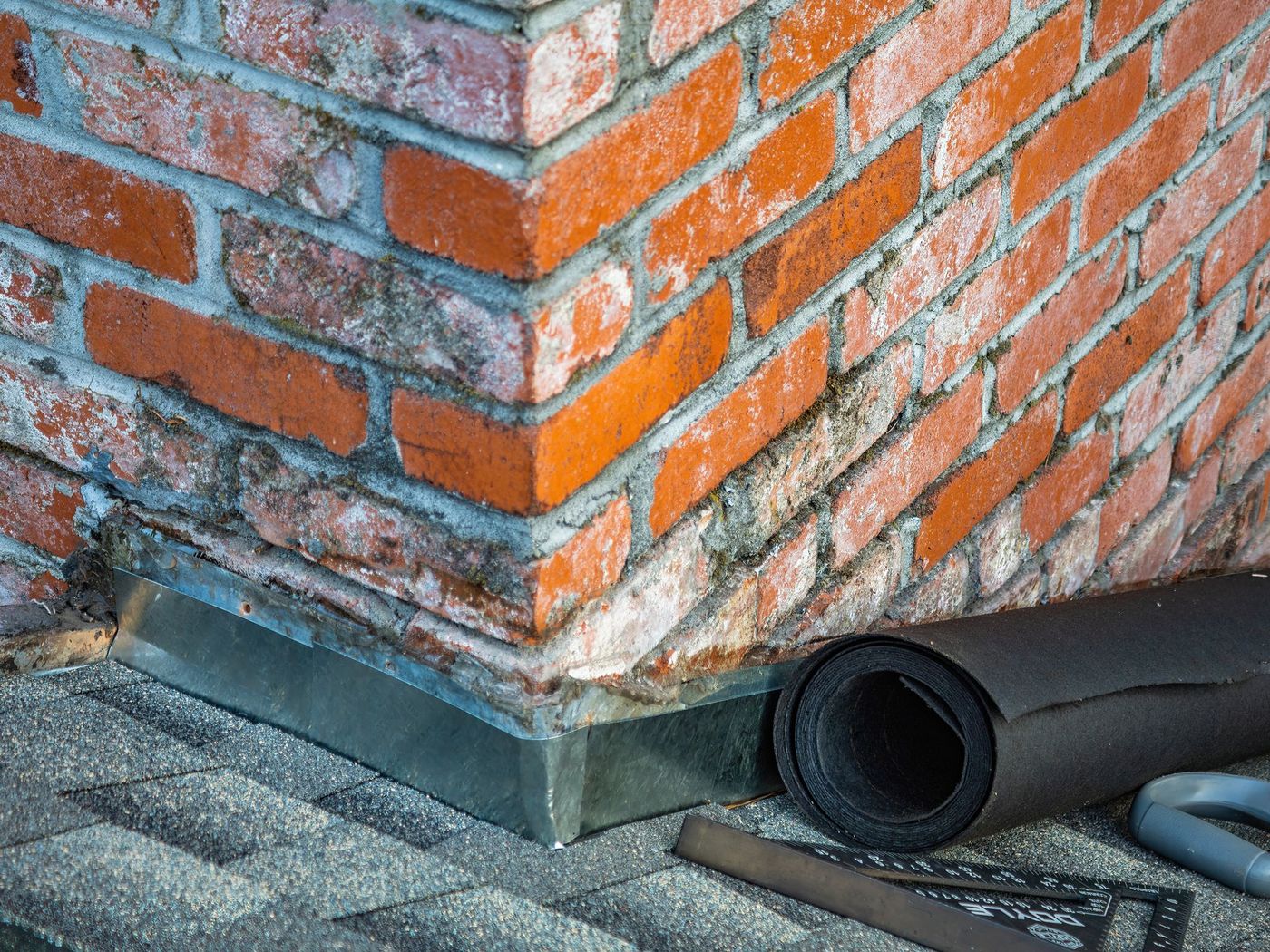 05Chimney: counter flashing and cricketFix now
Counter flashing is let into the mortar and still tight. There is no cricket, and debris and water are sitting on the uphill side.
 04Step flashing at walls and dormersWatch
Reused at the dormer sidewall. Sealed, not woven. It will be a leak.
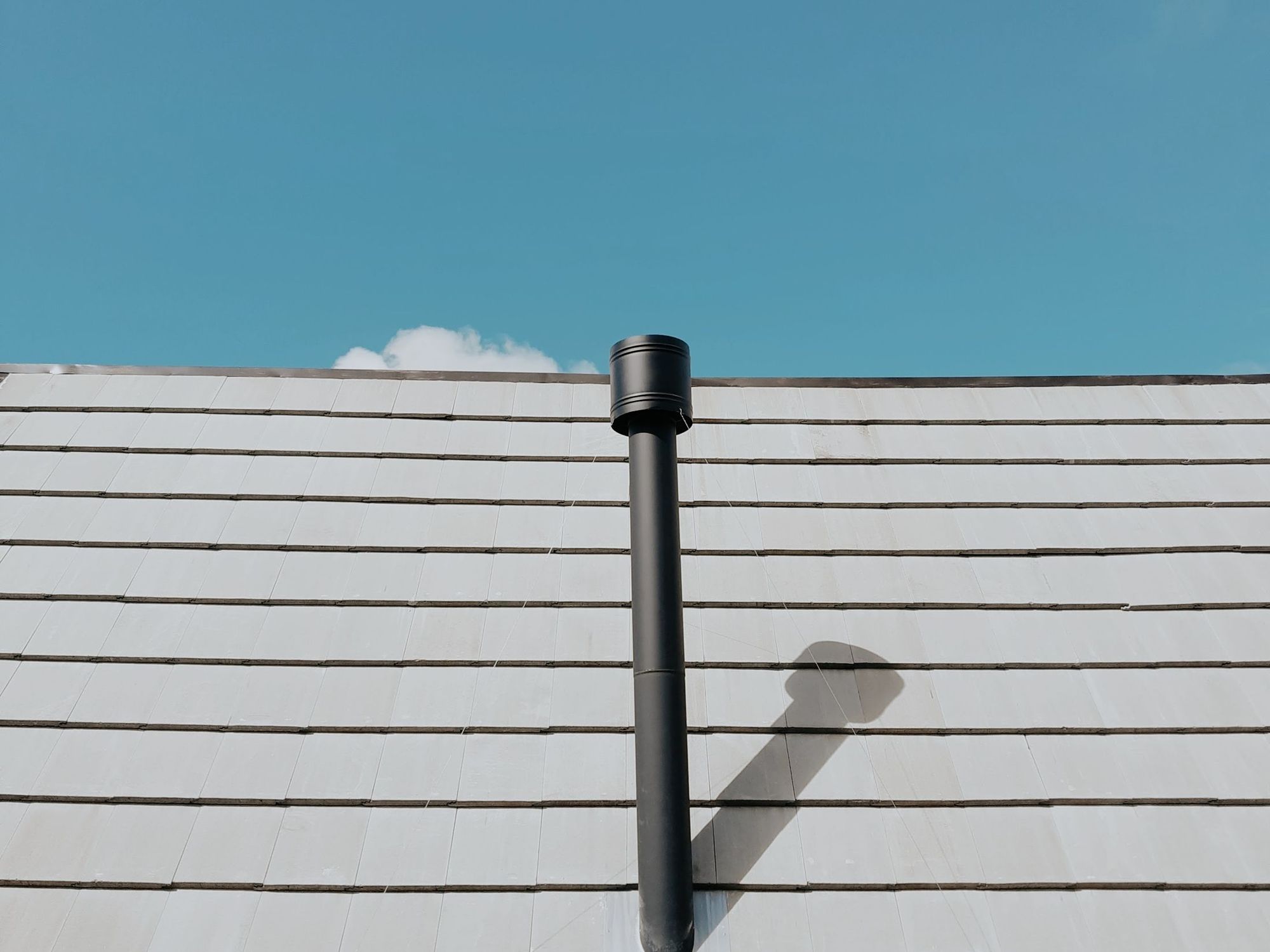 03Pipe boots, skylights and penetrationsFix now
Both rubber collars split at the pipe. This is the leak over the hall bath. Skylight curb is intact. An abandoned dish mount is lag-bolted through the field, unsealed.


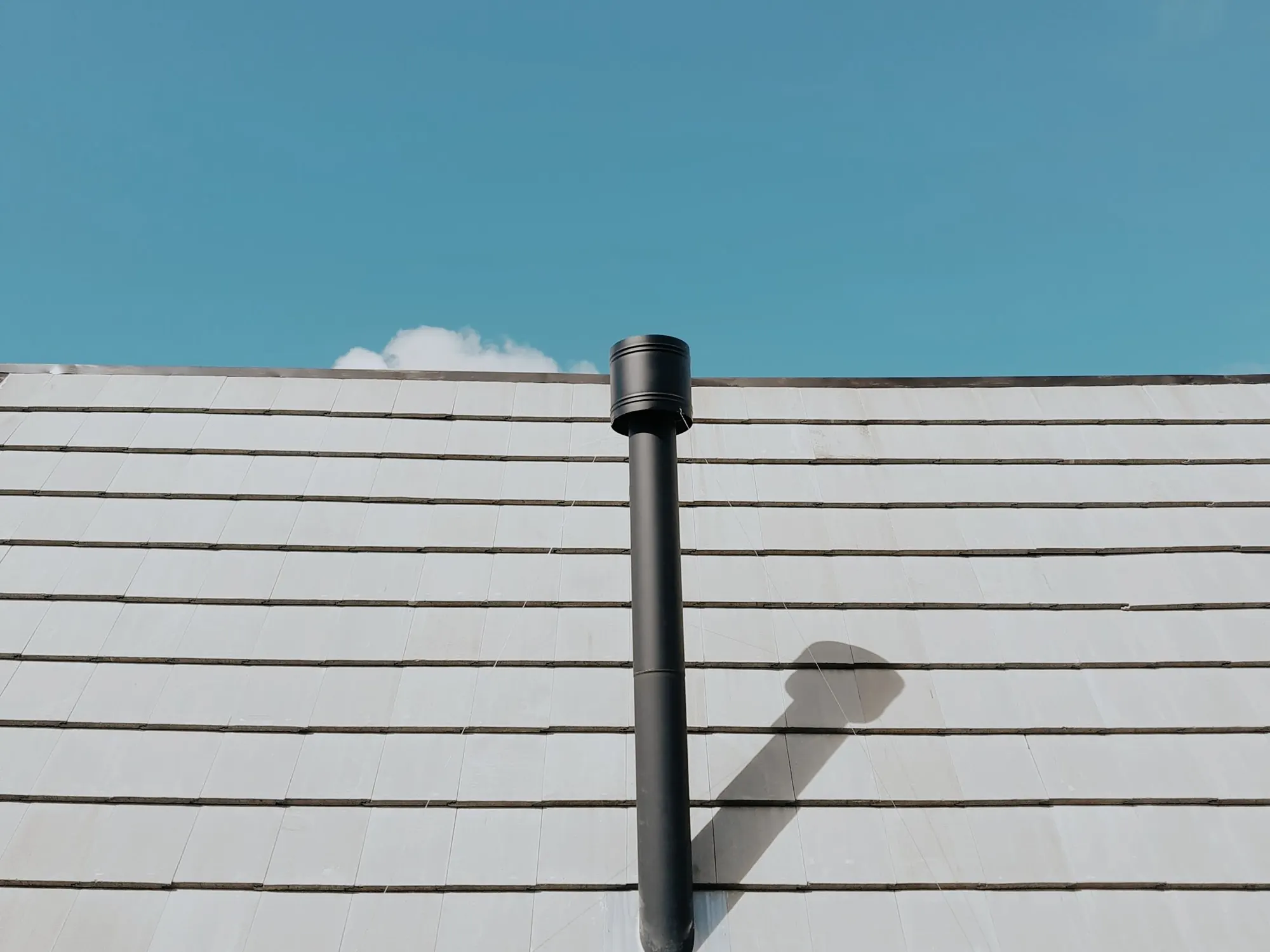

Flashing problems we see most in this area
- Reused step flashing from a prior roof, tucked back under new shingles instead of replaced
- Missing chimney crickets, which let water pool and back up behind the chimney during heavy rain
- Cut three-tab shingle used as starter strip instead of proper starter, common on builder-grade first roofs
- Short or absent drip edge at eaves and rakes, letting water get behind the fascia instead of into the gutter
- Cracked or dried-out pipe boots, a near-guaranteed leak point on any roof past ten years old
- Soffit vents painted shut during a prior repaint, cutting off intake air the attic needs
What drives a flashing repair job
| Number of penetrations | A single pipe boot replacement is a small job; a chimney with a missing cricket, a wall intersection, and a skylight all together adds up fast. |
|---|---|
| Whether shingles need to come up | Proper step flashing replacement means pulling back the surrounding shingle courses, not just caulking over the old metal. |
| Chimney construction | Brick chimneys need counter flashing cut into the mortar joint, which takes longer and more care than a wood-framed chase. |
| Access and pitch | A steep valley or a chimney set high on the roof changes staging time regardless of the flashing scope itself. |
When flashing repair points to a bigger job
If we find reused step flashing, a missing cricket, and short drip edge all on the same roof, that's usually a sign the whole roof was built to the lowest standard the builder could get away with, not an isolated defect. In that case we'll say so directly and talk through whether a targeted repair makes sense or whether you're better served planning for replacement before more of these show up. See Concord or Harrisburg for how this plays out in those specific subdivisions, and book a visit when you're ready to have Tom take a look.
Gutters tie directly into this conversation too, since a bad drip edge sends water behind the gutter no matter how well the gutter itself is hung. If flashing problems turn up during a repair, it's worth having the eave line checked at the same time rather than discovering a second, related problem on a separate visit later. See gutters and downspouts for how that check fits into the same visit, and how a bad drip edge and a struggling gutter usually get diagnosed together rather than as two unrelated calls.
Questions we get on the phone
Why does my chimney keep leaking on the same side every time it rains hard?
That's almost always a missing or undersized chimney cricket, which is supposed to divert water around the uphill side instead of letting it dam up against the brick. Plenty of original construction in this area skipped it, and we can usually confirm it with a look at the water trail on the attic decking.
Can you fix flashing without replacing the whole roof?
Yes, in most cases flashing repair is done in place by pulling back the surrounding shingle courses, replacing the metal and underlayment, and reinstalling the shingles. It's only a bigger job when the roof has several separate flashing failures at once, which we'll tell you plainly if we see it.
What is drip edge and why does it matter?
Drip edge is a bent metal strip installed along the eaves and rakes that throws water off the roof deck and into the gutter instead of letting it wick behind the fascia and rot the wood underneath. It's cheap and fast to install correctly, which is exactly why it's the part some roofers skip on a first roof.
How long does a pipe boot last before it needs replacing?
Most rubber pipe boots start cracking from sun exposure somewhere around ten to fifteen years, well before the shingles around them look worn. It's one of the most common single leak points we find on otherwise sound roofs, and it's a quick fix once identified.
Have Tom walk the roof before anyone talks about money.
Monday to Friday 7am to 6pm. Saturday 8am to 2pm. Active leaks answered after hours.