
Arborist Consultation & Risk Assessment in Charlotte, NC
Before anyone touches a chainsaw, an ISA Certified Arborist looks at what's actually happening inside the tree, not just what's leaning toward your roof. Most consultations end in a plan. About one in five end in "leave it."
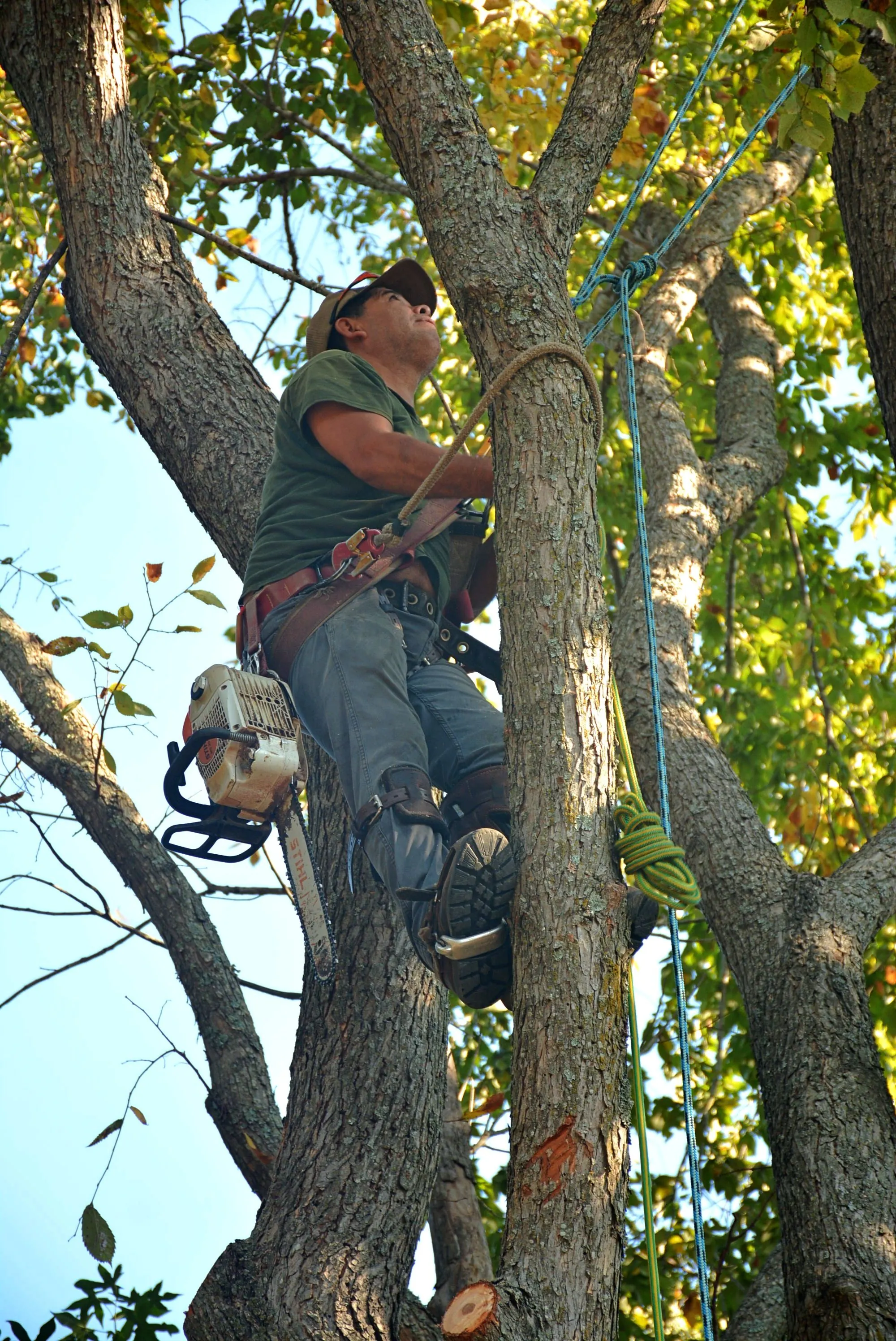
Ask us to remove a tree in Myers Park or Dilworth, and there's a real chance the answer, after Wes climbs it, is "leave it." About one tree in five that people call us to take down turns out sound enough to keep, sometimes with a prune, sometimes with a cable, sometimes with nothing at all. That's what an arborist consultation is for. It isn't a sales visit. It's a second set of eyes trained to tell the difference between a tree that looks bad and a tree that is bad.
What an ISA Certified Arborist actually looks at
Wes climbs or walks every tree himself before anyone signs off on a plan — he's the one deciding what gets cut, not just the person who wrote the estimate. A consultation isn't a glance from the curb. It's a slow look at the specific places trees fail:
- Root flare — where the trunk meets the ground. Soil piled against the flare, or a flare that's lifting on one side, is often the first sign of root failure, years before the canopy shows any stress. In Charlotte's red clay, mulch and grading routinely bury the flare entirely, so the first thing Wes usually does is pull soil back by hand to see what's actually there.
- Cavities — hollow sections in the trunk or major limbs. A cavity by itself isn't a death sentence; what matters is how much solid wood is left around it.
- Fungal conks — the shelf-like mushrooms that show up on bark or at the base. Different species point to different kinds of decay, and where they're growing tells us whether it's in the roots, the trunk, or a single limb.
- Lean — how far off vertical, and whether it's an old lean the tree has compensated for with wood growth, or a new one that shows up as cracked soil and lifted roots on the opposite side.
- Included bark — where two stems grow so close together that bark gets pinched between them instead of forming solid wood. It's the weak seam that splits first in an ice storm or a straight-line wind.
- Deadwood percentage — roughly how much of the crown is dead relative to live. A little deadwood at the top is normal on an older willow oak. A lot of it, especially low and throughout, is a different conversation.
What the visit actually looks like
Wes walks the property first, from a distance, looking at overall shape and lean before he ever gets close to the bark. Then he works the base of the trunk with a mallet, listening for the dull, hollow sound that means decay instead of solid wood, and probes any cavity with a screwdriver or a resistograph if the sound alone isn't conclusive. Loblolly pines get a different kind of attention than oaks: their failure mode is usually a snapped top or trunk in high wind rather than gradual root decay, so the lean and the trunk itself matter more than what's happening at the base. A single-tree visit usually runs 20 to 40 minutes. A whole-property walk, the kind we do for a pending home purchase, can run closer to an hour.
The written report
The report documents species, condition, specific defects found, and a recommendation: remove, monitor, prune, or cable. It's written to hold up. Insurance adjusters, real estate attorneys, and HOA boards all read it the same way, because it says what was actually there, not what makes the strongest case for one outcome or another.
When it's worth calling before there's an emergency
- Buying a house. A 90-year-old willow oak thirty feet from a roofline is either a real asset or a real liability, and you want to know which before closing, not after the first thunderstorm.
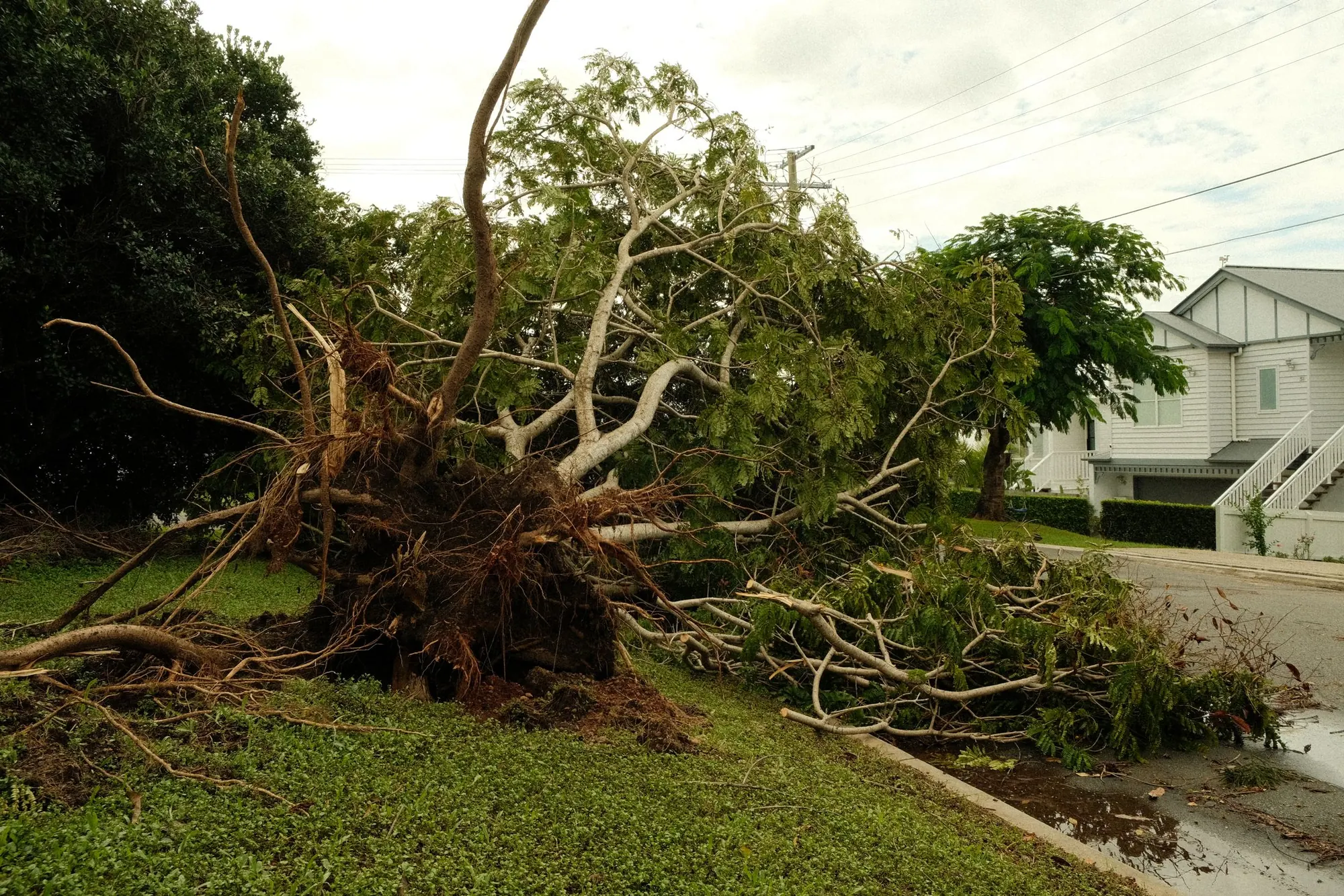
- After a storm. A tree that lost a limb or took on a new lean needs someone who can tell you whether the rest of it is still structurally sound.
- HOA disputes. When a board wants a tree gone and a homeowner disagrees, or the reverse, a written, species-specific assessment settles it with facts instead of opinions.
- Insurance requests. Carriers sometimes want documentation before a claim, or before they'll renew a policy on a property with mature trees close to the house.
- A tree you love that's declining. Thinning canopy, early leaf drop, or dieback in the upper crown over a season or two is worth a look before it becomes an emergency.
The honest number
Roughly one in five trees we're called out to remove, we recommend keeping. Sometimes it's a cable and a follow-up in a year. Sometimes it's nothing: a lean that's been stable for decades, or deadwood that's cosmetic, not structural. We say so either way, because the report is worth less the moment it starts telling people what they want to hear instead of what's actually up there.
If the answer is "keep it, but support it"
Co-dominant stems with included bark, or a crotch that's already split partway, are the cases where cabling or bracing lets a tree stay standing instead of coming down. See cabling and bracing for how that works and which trees are good candidates.
Questions about this
How long does a consultation take?
Usually 30 to 60 minutes, depending on the tree and how much of the property Wes needs to walk. For a single tree it's often closer to 20 minutes. He talks through what he's seeing as he goes, not just hands you a verdict at the end.
Do I need the written report, or is the visit enough?
Most homeowners just need the visit and the verbal recommendation that comes with any quote. The written report matters when you need documentation for someone else to read: a lender, an insurance adjuster, an HOA board, or a real estate closing attorney handling a sale.
Will you push me toward removal since that's more work for you?
No. About one in five trees we're called to remove, we recommend keeping instead. A cabled or otherwise healthy tree saves you money and keeps the canopy, which is a better outcome for the neighborhood and for our reputation than a stump.
What if I need documentation fast, for a closing or a claim?
Tell us the deadline when you call. We can usually get a consultation scheduled within a few days, and the written report turned around quickly after Wes has actually seen the tree. Call (704) 555-0148, say it's time-sensitive, and we'll work around your date.
Get a written number, on the spot.
Free on-site quote, usually within 48 hours. The number we write is the number you pay.