
Planting
Planting and bed design in Charlotte, NC
A bed plan is a list before it's a shovel. We pick plants for the soil and sun you actually have, then write it all down.


Plants that hold up to a Charlotte summer
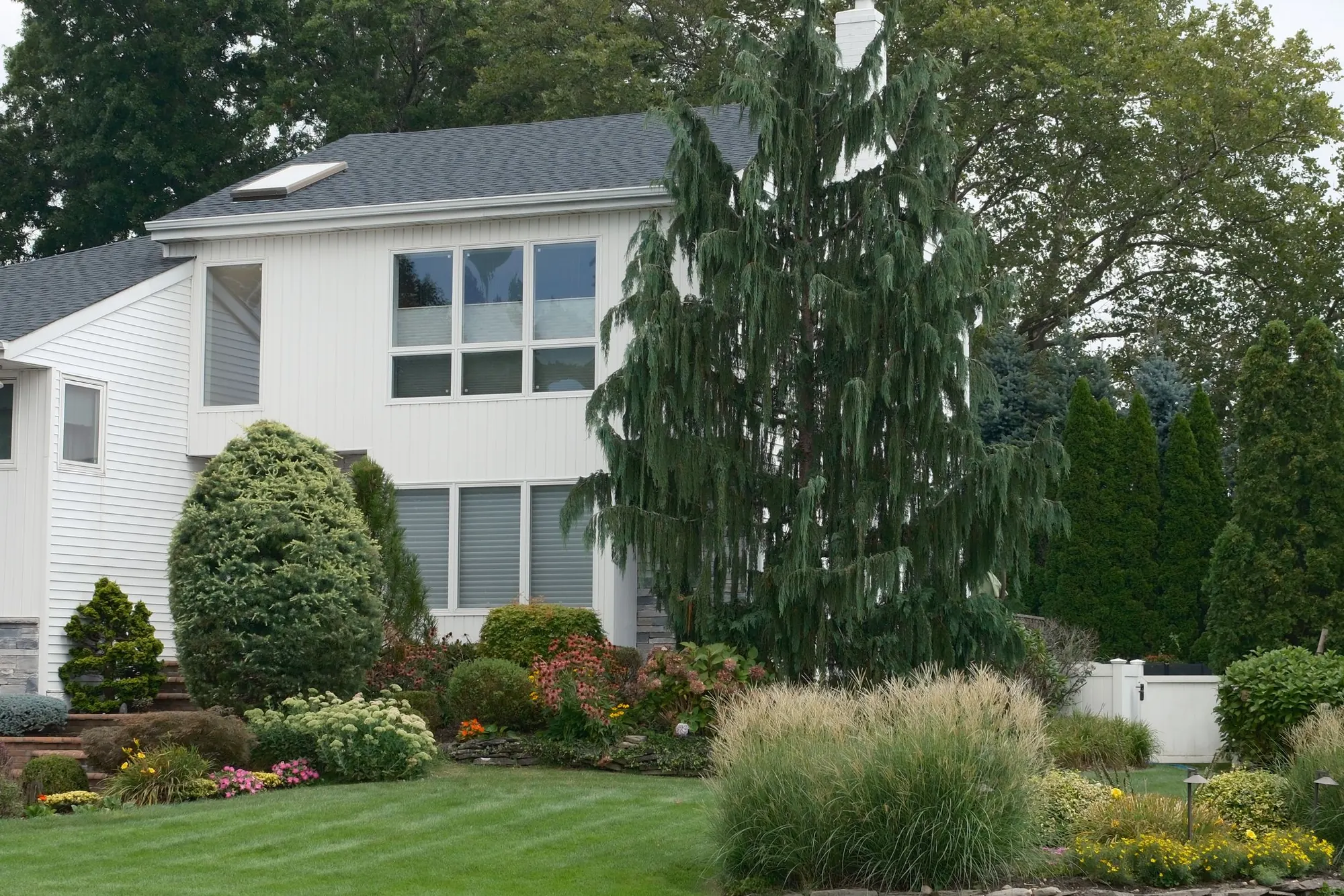
Charlotte red clay drains slowly, which means a bed on a flat lot can sit wet for days after a storm rolls through off the Catawba. We amend beds with pine bark fines rather than fighting the clay itself, and we pick plants that tolerate both the wet spells and the brutal stretch of July and August heat that follows. Otto Luyken laurel and dwarf yaupon holly do the structural work along a foundation line. Oakleaf hydrangea and Encore azalea carry the color, with the azalea reblooming into fall instead of finishing in May like older varieties. Muhly grass and switchgrass earn their spot at the back of a bed for the way they move and catch light in October, and a Little Gem magnolia or a serviceberry gives a yard its one specimen tree without swallowing the whole front bed the way a full-size magnolia would.
Ground layer matters as much as the anchor plants. Liriope and creeping jenny hold a bed edge and choke out the weeds that would otherwise move in through mulch. Inkberry holly and abelia fill middle ground with a looser, more informal habit than a sheared boxwood hedge. Nandina 'Firepower' and cast iron plant handle shade pockets under a river birch or along the north side of a house, where Bermuda lawn thins out anyway. Autumn fern rounds out deep shade where almost nothing else takes.
Every one of those choices depends on where the sun actually falls on your lot and how the water moves across it, which is why we walk before we plant rather than working off a stock list. HOA architectural review in Steele Creek and Ballantyne subdivisions sometimes restricts bed lines visible from the street, so we check that before we design rather than after.
After planting, we walk the beds with you and leave a watering schedule for the first summer, since most early plant loss in this clay comes down to water rather than a bad plant.
What's in a bed design proposal
- A walk of the yard noting sun, shade, drainage, and any HOA plant restrictions
- The planting schedule: bed by bed, plant by plant, with count, mature size, and why each one is there
- Bed edging and amended soil with pine bark fines where the clay needs it
- Hardwood mulch depth appropriate to the bed, not just a truckload spread thin
- Irrigation zoning tied to what's actually planted, since a shrub bed and a lawn don't want the same schedule
- A watering schedule for the first summer, since new plants in clay need steady water to root in

The planting schedule
Nothing gets ordered until you have seen this table. It comes with the proposal: which bed, which plant, how many, how big it gets, and the reason it earned a spot. That last column is the one worth reading closely, because each plant should have a reason to be where it is. Below is a sample from a Steele Creek back yard.
| Bed | Plant | Count | Mature size | Why it's there |
|---|---|---|---|---|
| Front walk, west | Otto Luyken laurel | 9 | 3-4 ft tall, 5 ft wide | Evergreen low hedge that takes hard afternoon sun and covers the foundation without being sheared twice a year. |
| Front walk, west | Liriope 'Big Blue' | 24 | 12-15 in | Holds the mulch line against the walk and survives the mail carrier cutting the corner. |
| Front corner | Little Gem magnolia | 1 | 20 ft tall, 10 ft wide | Anchors a two-story corner without swallowing the setback the way a full Southern magnolia would. |
| North bed, shade | Oakleaf hydrangea | 5 | 6 ft tall and wide | Handles dry shade under the oaks, holds leaves into December, then turns wine red. |
| North bed, shade | Encore azalea | 7 | 3 ft | Blooms in spring and again in fall so the shade side isn't blank for half the year. |
| Patio edge, sun | Muhly grass | 11 | 3 ft, 4 ft in bloom | Pink haze in October right where the evening light crosses the paver edge. Cut back once, in February. |
| Patio edge, sun | Dwarf yaupon holly | 6 | 3 ft | Evergreen mass so the patio isn't bare in January, and it shrugs off heat coming off the stone. |
| Slope above wall | Creeping jenny | 30 | 4 in, spreading | Covers the fill above the wall fast, so the first hard rain doesn't move it down the hill. |
Sample schedule. Plant counts and varieties change with the light, the grade and what's already growing there.
Why the planting schedule matters more than it looks like it should
The planting schedule comes with the proposal, and it's the thing we keep coming back to once plants are in the ground. It tells you and us what's supposed to be where, how big it's supposed to get, and why it was chosen, so that when a plant struggles, or finally reaches mature size and starts crowding its neighbor, there's a record instead of a guess.
Beds around a new patio or wall get designed on the same sheet as the hardscape, so the grade and the bed lines work together. If you're planning both, start with paver patios or retaining walls and we'll fold the bed design into that same walk. You can also see finished bed work on the projects page, or get a sense of how planting factors into an overall number on the cost page.
Questions about planting and bed design
What is the planting schedule?
It's the table that comes with a planting proposal, listing each bed, the plant going in it, the count, its mature size, and why it was chosen for that spot. It becomes the reference for what's planted where long after the crew leaves.
Why do new plants fail in their first year?
Usually water. Too little during the first hot stretch, before roots have grown out into the clay, or too much in a bed that doesn't drain. That's why we look at the grade before we plant, favor fall planting where we can, and tie planting and irrigation together on the proposal instead of treating them separately.
How much does bed design and planting cost?
It depends on bed square footage, plant sizes, and how much soil amendment the site needs. We write a proposal after walking the yard rather than pricing off a phone call, since a shaded clay bed and a sunny sloped one call for very different plant lists.
Do you only use native plants?
Mostly Piedmont-appropriate plants that handle our clay and heat, whether or not they're native to the region. Otto Luyken laurel and oakleaf hydrangea aren't native, but they perform reliably here, which matters more to us than a strict native-only list.

Book a yard walk
Walk the yard with Luis.
A walk around the property with you, then a written proposal with the plan and the plant list.
Or call (704) 555-0163 · Mon-Fri 7:30am-5pm · Sat by appointment