
Patios
Paver patios in Charlotte, NC
A patio is only as good as what's under it. We set base and drainage first, then the pavers, because that's the order that keeps it flat.


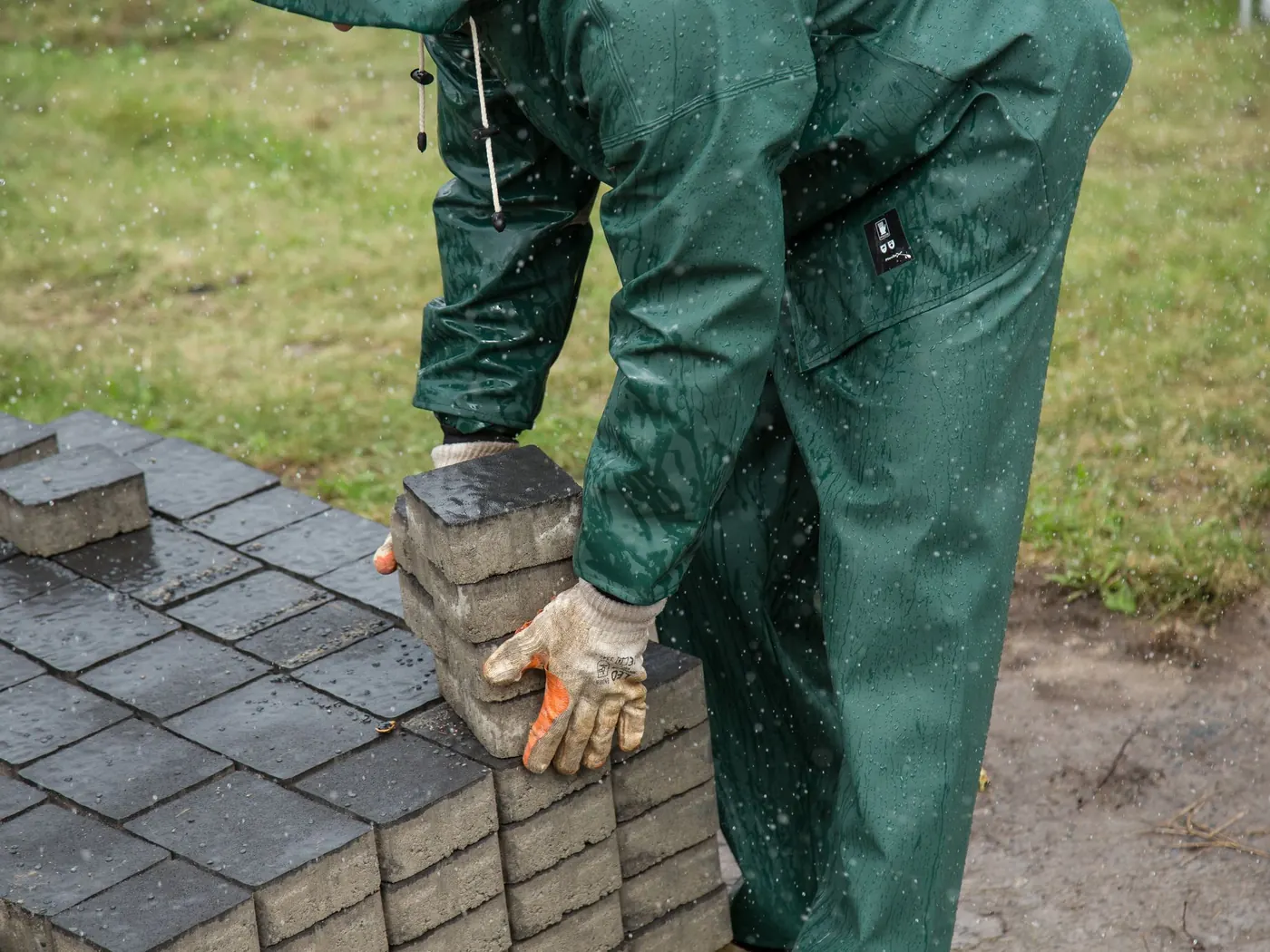
Why the base matters more than the pavers
Most of what goes wrong with a patio in Charlotte happens before a single paver gets laid. This is red clay country. On a flat lot it holds water instead of shedding it, and a patio set on top of wet clay will heave and settle unevenly within a couple of seasons. We excavate to a real depth, not a skim cut, and build up compacted crusher run in lifts with a plate compactor between each one. Where the yard is already cut into a slope, which describes half the newer subdivisions off Steele Creek Rd and out toward Ballantyne, we run the grade the same direction the builder ran it to the street, not against it.
For the surface we work in tumbled concrete paver, clay brick, and bluestone. Tumbled paver handles the freeze most Januaries without chipping at the edges. Bluestone reads a little more formal and it's what we reach for near a front entry or a Victorian-style porch. Either way the joints get polymeric sand swept in and activated, which locks the field so ants and rain don't wash it out from underneath.
Walkways get the same base treatment as patios, just narrower. A path that connects a driveway to a side gate takes almost as much foot traffic as a patio, so we don't skimp on depth just because it's four feet wide instead of sixteen.
If your lot backs up to the Catawba or sits close to Lake Wylie on the Tega Cay or Belmont side, humidity keeps the base damp longer after a rain, so we often add extra drainage stone under those patios.
How a patio build actually goes
- Walk and proposalLuis walks the yard, checks the grade with a transit level, and asks how you actually use the space before anything gets drawn. The written design-and-build proposal covers material, square footage, and the drainage work the site needs.
- Locates and layoutWe call 811 and, on South Carolina addresses, coordinate with York County as needed before anything gets marked. Layout gets staked and squared against the house, not just eyeballed from the porch.
- Excavation and baseA mini skid or trencher pulls the clay out to grade, then compacted base goes in in lifts. This is the step that decides whether the patio is still flat in five years.
- Setting paversPavers or bluestone go down on a screeded bed, cut with a wet saw at the borders, then compacted into place with the plate compactor before joint sand goes in.
- WalkthroughWe walk it with you, hose down the joints, and point out any HOA architectural review paperwork that still needs to go in if your subdivision requires it.


What drives the number on your proposal
| Square footage and shape | A simple rectangle costs less labor than a patio with curves, steps, or a fire pit cut into it. |
|---|---|
| Material | Tumbled paver, clay brick, and bluestone all install differently and price differently on the proposal. |
| Grade and drainage | A sloped lot or standing water calls for more excavation, drainage stone, and sometimes a buried pipe before the patio ever goes in. |
| Access | A backyard reachable only through a side gate means more hand work and less machine time, which changes the labor line. |
| HOA and permits | Steele Creek and Ballantyne subdivisions often require an architectural review packet; Fort Mill and Tega Cay jobs run through York County permitting. |
Five things we don't do on a patio
- Lay pavers on a bed of sand over undisturbed clay. The base gets excavated, filled with graded aggregate and compacted in lifts, or the patio moves in the first wet spring.
- Run the surface dead level. Every patio gets a small fall away from the house, enough that water leaves and not enough that a table wobbles.
- Skip the edge restraint because it ends up buried and nobody sees it. Without it the outside course walks outward and the joints open.
- Build up to a downspout and hope. Downspouts get extended under the patio and daylighted past it before the base goes in.
- Start before the association has signed off on the drawing and the material, in Ballantyne or anywhere else that reviews hardscape.
Questions about paver patios and walkways
How much does a paver patio cost in Charlotte?
It depends on square footage, material, and how much grading and drainage work the site needs. We don't quote a figure until Luis has walked the yard and checked the grade. You get a written design-and-build proposal that breaks out material, base work, and any permit or HOA steps, so there's nothing to guess at before you sign off.
Will my patio settle in Charlotte clay?
Not if the base is built right, and that's most of the job as far as we're concerned. Settling almost always traces back to a thin base, poor compaction, or water getting underneath, which is why we excavate to a real depth, compact in lifts, and handle downspouts and drainage before the first paver goes down.
Do I need HOA approval for a patio in Ballantyne or Steele Creek?
Most likely, yes. Subdivisions on the south-west side commonly require an architectural review packet before hardscape work starts. We check what your neighborhood asks for during the walk and can help you get the packet together.
Can you also handle the planting around a new patio?
Yes, and it's worth planning them together. The patio and the planting beds around it get drawn on the same sheet, so the grade, the drainage, and the bed lines all work together instead of fighting each other later.

Book a yard walk
Walk the yard with Luis.
A walk around the property with you, then a written proposal with the plan and the plant list.
Or call (704) 555-0163 · Mon-Fri 7:30am-5pm · Sat by appointment